welcome to the world of Minitz

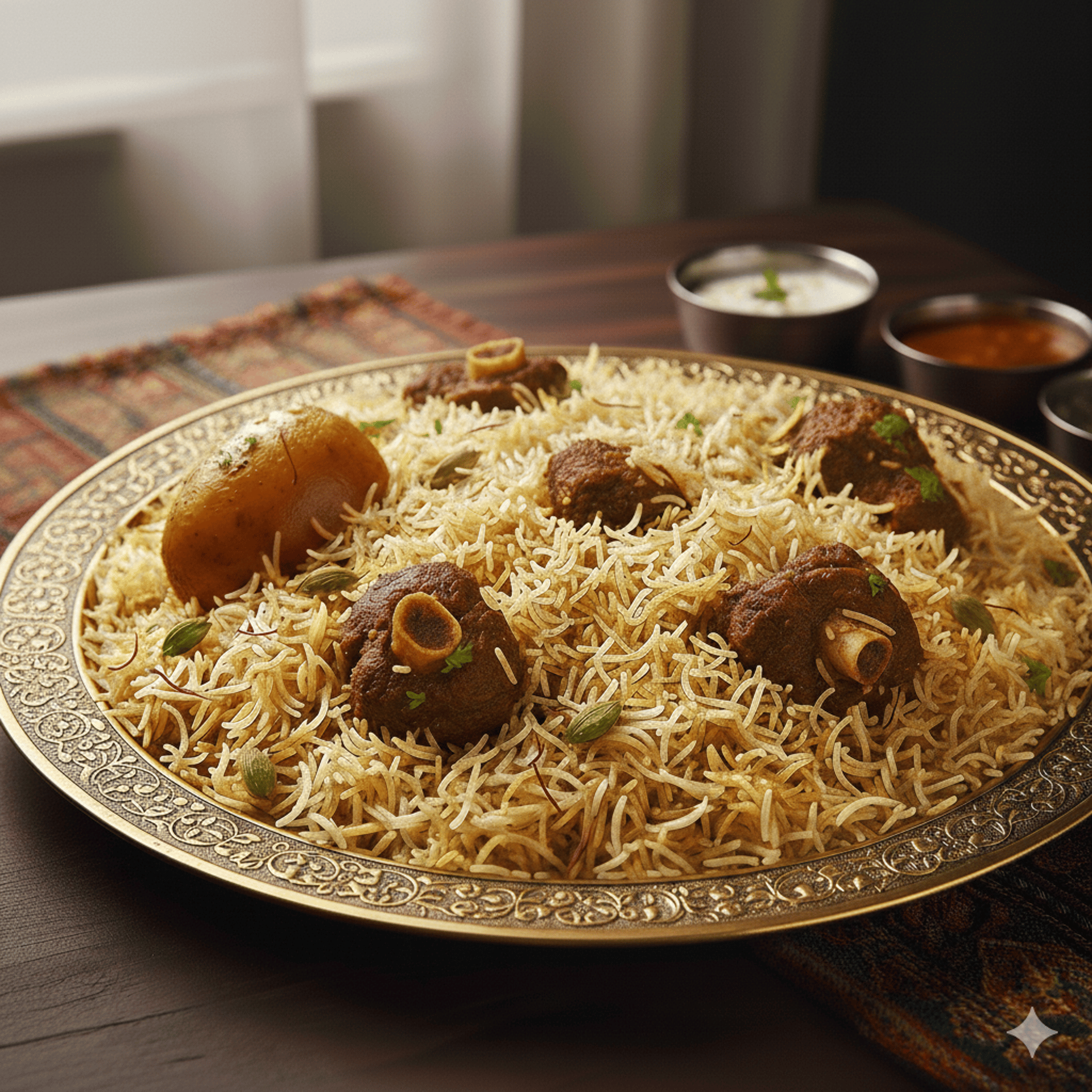
The Story of the Aloo in Calcutta Biryani and the Artist in a Nawab
Where exile birthed a culinary masterpiece—and a king found poetry in potatoes The Nawab Who Sailed Into Exile With an Empire.
1/19/20262 min read
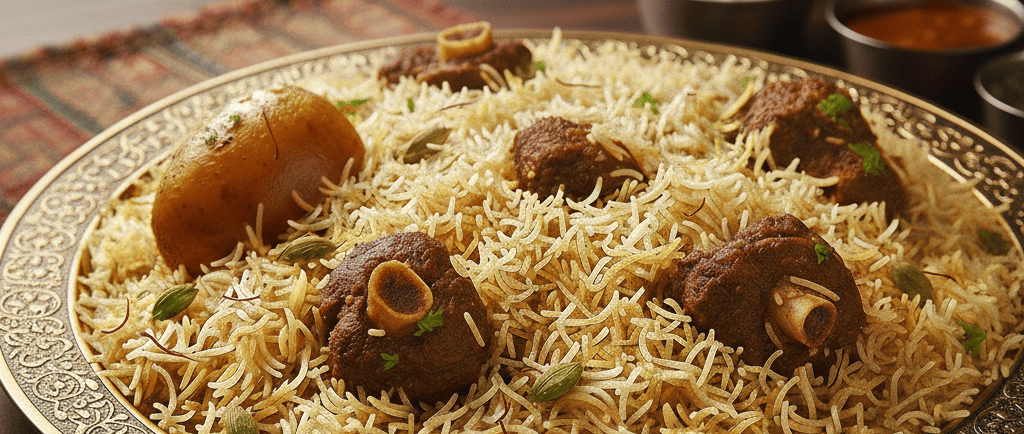
The Aloo in Calcutta Biryani and the Artist in a Nawab
Where exile birthed a culinary masterpiece—and a king found poetry in potatoes
The Nawab Who Sailed Into Exile With an Empire
The houseboats glided across the Ganga as the sun dipped crimson over the horizon. On its banks, a bard sang of separation. The birds flew home—while he, the fallen Nawab of Awadh, sailed away from his.
Wajid Ali Shah had lost his kingdom, his city, and his people. Yet even in exile, he carried a universe within—hundreds of wives and concubines, hundreds of Khansamas, musicians, dancers, and poets. His was not a quiet departure but a magnificent procession of culture itself, floating down the sacred river toward an uncertain future.
Legend says that when warned of the British attack, the Nawab—bathing in his tub—calmly asked, "But who will help me wear my footwear?" This wasn't arrogance; it was the gentle bewilderment of a man who lived for art, not war.
May 13, 1856
Wajid Ali Shah arrives at Metiaburuz, Garden Reach, Kolkata, deported from his beloved Lucknow
Building Mini-Lucknow
The Nawab recreates the grandeur of Awadh—constructing palaces, establishing courts, and gathering artists from across the land
A Culinary Revolution
Royal chefs begin experimenting with local ingredients, unknowingly creating what would become an iconic Bengali delicacy
1887
The Nawab passes away, but his cultural legacy—and his biryani—live on forever
When the Humble Potato Became Royal
His chefs recreated the royal dishes of Awadh—Kormas, Kebabs, Sheermal, and Biryani. But one ingredient transformed everything—the humble potato.
The Folklore
Popular legend claims the Nawab added potatoes because exile had made him too poor to afford meat—a romantic tale of resourcefulness born from deprivation
The Reality
History reveals he received a handsome British pension of ₹1 lakh per month—a fortune in any age. Poverty was never part of his story
The Innovation
The potato wasn't a symbol of poverty; it was a mark of exotic luxury—a foreign delicacy worthy of royal experimentation and culinary artistry
A Jewel From Distant Lands
Imported by the Portuguese and popularized by the British, potatoes were newcomers to Indian soil. They journeyed from the Andes—where they had been cultivated for over 5,000 years—and were once viewed with suspicion, even considered poisonous and unfit for temple offerings.
To the Nawab's innovative chefs, however, the potato represented possibility. Here was an ingredient that could absorb the essence of royal spices, soak up saffron-infused ghee, and add a textural counterpoint to tender meat and fragrant rice.
"Thus, the Calcutta Biryani was born—light, fragrant, and adorned with golden potatoes that soaked up the aroma of saffron and ghee like jewels in a crown."
An Artist's Eternal Farewell
In exile, Wajid Ali Shah continued to compose music, write poetry, and perform plays. He poured his longing into every ghazal, every thumri, every theatrical performance. Yet his heart ached perpetually for Lucknow—the city of his birth, his crown, his soul.
His immortal thumri, "Babul Mora Naihar Chhooto Jaay" (Father, My Homeland Slips Away), remains a haunting farewell to the city he loved—and lost. When sung, it carries the weight of separation that only those who have been exiled from home can truly understand.
The man who brought tehzeeb to exile and the aloo to biryani died in 1887. But his artistry lives on—every time a spoon breaks into a Calcutta Biryani, you taste the nostalgia of a Nawab who refused to let displacement diminish his creative spirit.
Experience the Legacy: At Minitz, we honor culinary stories like these—where history, culture, and spice converge to create something timeless. Our carefully sourced spices carry the same spirit of innovation that transformed a simple potato into a royal treasure. content
ZAPPAK CULINARY EXPEDITIONS PVT LTD
Cooking Made Fun for Everyone
Contact
Newsletter
email : customercare@zappak.in
+ 91 9667814039
© 2026 All rights reserved.
UDYAM -DL-03-0030513
CIN - U47219DL2023PTC410225
FSSAI CENTRAL LICENSE - 13326999000102
PAN - AAFCF3653A
TRADE LICENSE - MGT L08251791276996
IMPORTER - EXPORTER CODE - (IEC) AAFCF3653A
GST REGSITRATION - 07AAFCF3653A1Z1
D1/1232 Top Floor, Vasant Kunj, New Delhi 110070