welcome to the world of Minitz

The Story of Kathi Rolls
How a Desperate Man and a Royal Name Gave Kolkata Its Iconic Bite From the bustling streets of 1930s Calcutta to global food courts today, the Kathi Roll carries a story of resilience, innovation, and pure culinary genius wrapped in a paratha.
1/30/20262 min read
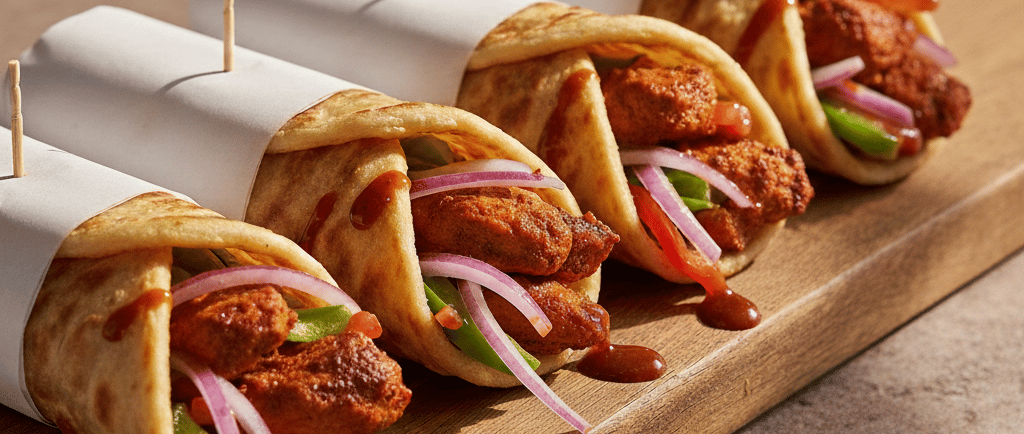
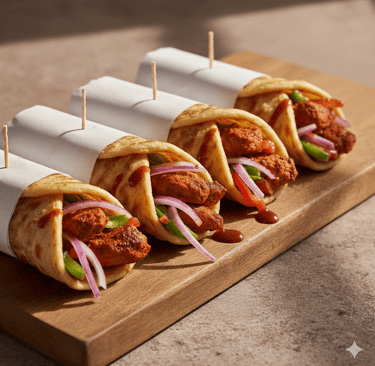
Kathi Roll: How a Desperate Man and a Royal Name Gave Kolkata Its Iconic Bite
From the bustling streets of 1930s Calcutta to global food courts today, the Kathi Roll carries a story of resilience, innovation, and pure culinary genius wrapped in a paratha.
A Cook's Crisis Becomes Culinary History
In the 1930s, when Calcutta's streets hummed with tram bells and colonial chatter, Raza Hassan Saheb found himself at rock bottom. Once a respected cook in aristocratic kitchens, he had lost everything—his position, his livelihood, his hope.
Standing on the edge of despair, he nearly gave up entirely. But sometimes, the universe has other plans. A friend's timely advice set him on a new path: selling kebabs and parathas from a humble street cart near the bustling Writers' Building.
His smoky, melt-in-the-mouth skewers were an instant sensation. Office workers, passersby, and curious British officers couldn't resist the aroma wafting through the air. But there was one small problem that would spark a revolution.
The Genius Wrap That Changed Everything
01
The Problem
British officers and busy professionals struggled to eat kebabs and parathas while standing—it was messy, inconvenient, and awkward with their formal attire.
02
The Spark
Raza Saheb had a brilliant idea: what if the kebab could be wrapped inside the paratha, creating a portable, hand-held meal that was easy to eat on the go?
03
The Birth
He wrapped the succulent kebab inside a paratha, added sliced onions and a dash of tangy chutney, and handed over what would become Kolkata's most iconic street food.
04
The Revolution
The Kathi Roll was born—a perfect marriage of convenience, flavor, and innovation that would travel across continents and generations.
From Iron Skewers to Bamboo Sticks: The Name Behind the Legend
The story behind the name "Kathi" is as delicious as the roll itself. Like most kebab vendors across India, Raza Saheb initially used iron skewers—they were durable, reliable, and lasted forever.
As his business exploded in popularity, he opened an eatery called Nizam's, named after his beloved grandson. The restaurant became legendary, drawing crowds from every corner of Calcutta. But success brought its own challenges.
By 1964, the demand had grown so massive that maintaining enough heavy iron skewers became nearly impossible. That's when Nizam's made a practical switch: lightweight bamboo skewers that could be sourced in large quantities.
In Bengali, these bamboo skewers are called kati or "stick." The names kati kabab and kati roll naturally followed, and just like that, a royal grandson's eatery gave Kolkata its most famous culinary export a name that would stick forever.
Did You Know?
The term "kati" literally means "stick" in Bengali, referring to the bamboo skewers that replaced iron ones in the 1960s.
From Park Street to the World
The 1940s Boom
Office-goers, students, and soldiers lined up for quick, hearty rolls that could be eaten on the move—smoky, spicy, utterly addictive.
Evolution of Flavors
The fillings evolved beautifully—chicken tikka, spiced egg, paneer, aloo—but the soul remained: that unmistakably Calcutta character.
Global Journey
Today, Kathi Rolls grace menus in London, New York, Dubai—sometimes with fancy names, but always tracing roots back to Nizam's.
What started as one man's desperate attempt to survive became a culinary legacy that transcends borders. Every bite of a Kathi Roll carries the spirit of resilience, the genius of innovation, and the unmistakable soul of Kolkata's streets. At Minitz, we celebrate stories like these—where food becomes more than sustenance; it becomes history, wrapped in a paratha.
ZAPPAK CULINARY EXPEDITIONS PVT LTD
Cooking Made Fun for Everyone
Contact
Newsletter
email : customercare@zappak.in
+ 91 9667814039
© 2026 All rights reserved.
UDYAM -DL-03-0030513
CIN - U47219DL2023PTC410225
FSSAI CENTRAL LICENSE - 13326999000102
PAN - AAFCF3653A
TRADE LICENSE - MGT L08251791276996
IMPORTER - EXPORTER CODE - (IEC) AAFCF3653A
GST REGSITRATION - 07AAFCF3653A1Z1
D1/1232 Top Floor, Vasant Kunj, New Delhi 110070