welcome to the world of Minitz

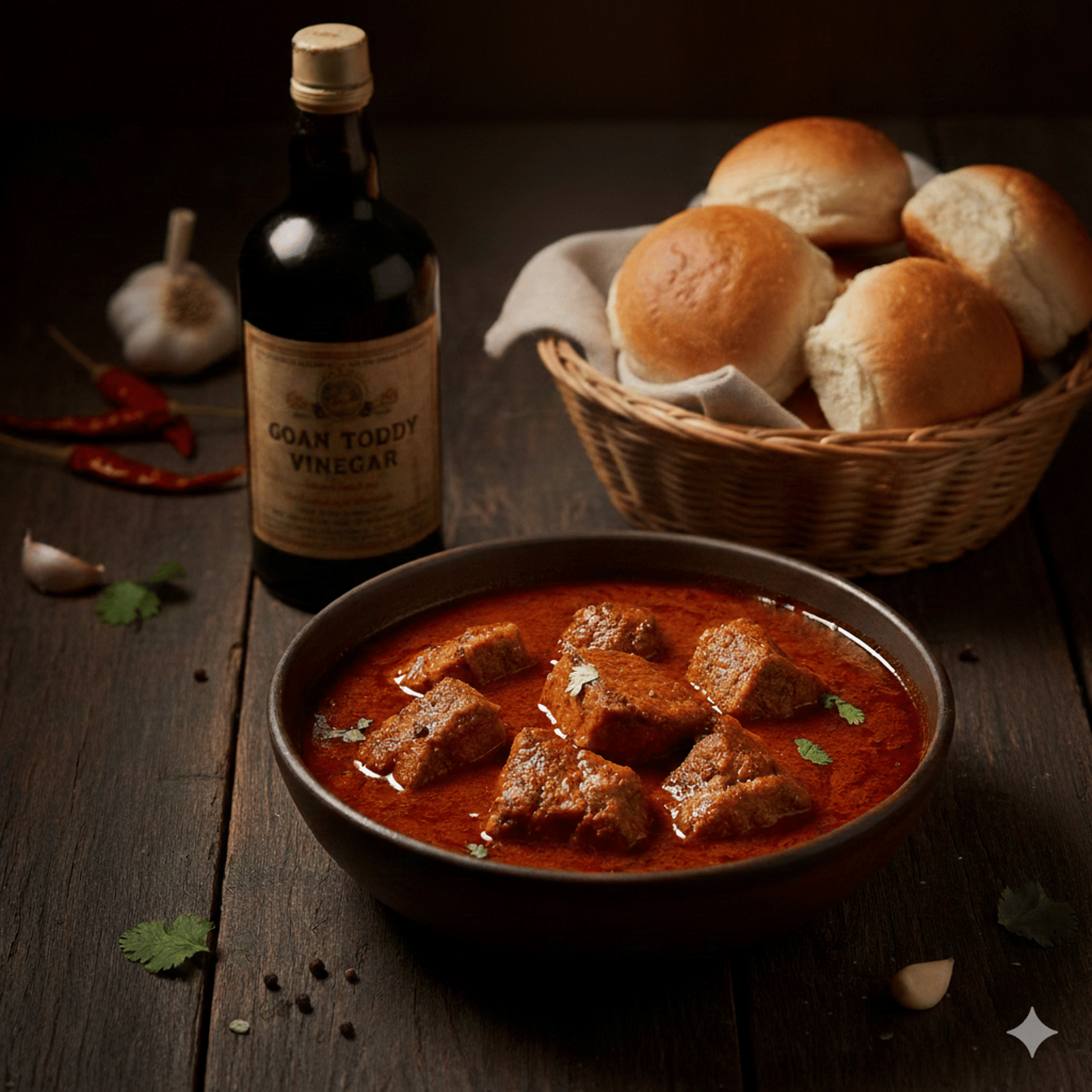
Story of Vindaloo: From Portuguese Wine to Goan Fire
Long before Vindaloo set tongues ablaze in Indian restaurants worldwide, it began as a dish of love, longing, and voyages across stormy seas.
1/19/20263 min read
Vindaloo: From Portuguese Wine to Goan Fire
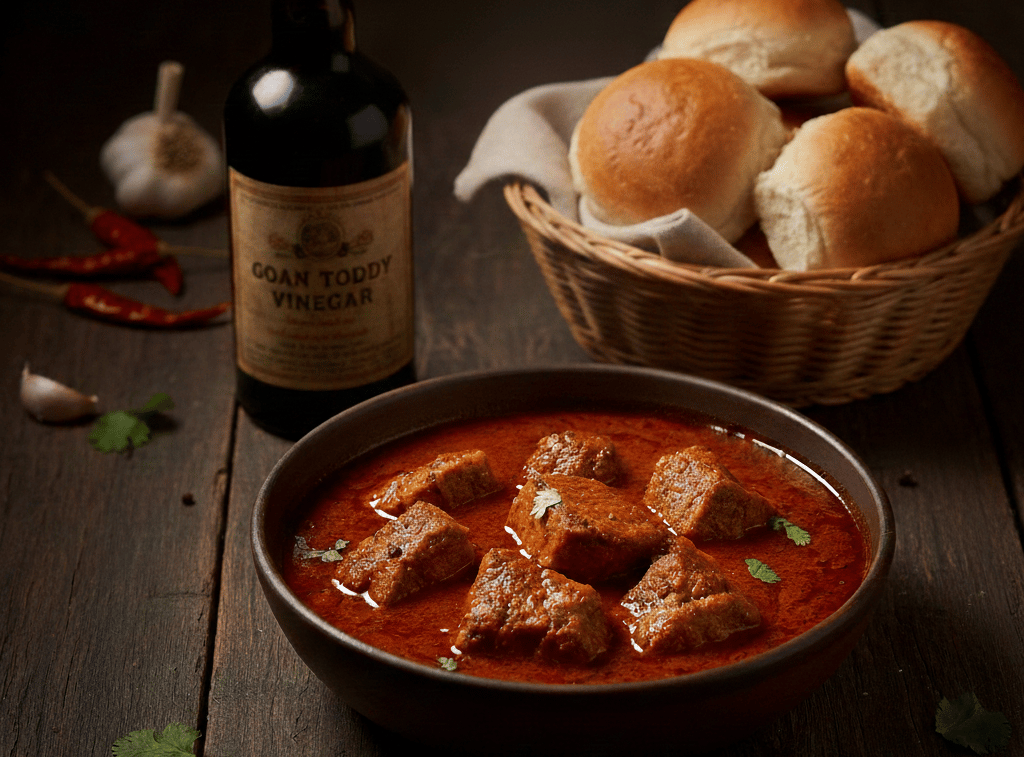
Long before Vindaloo set tongues ablaze in Indian restaurants worldwide, it began as a dish of love, longing, and voyages across stormy seas. This fiery curry's roots lie not in Goa's sun-drenched beaches but in the storm-tossed decks of 16th-century Portuguese ships, where sailors preserved their meat for months-long journeys.
A Dish Born at Sea: The Portuguese Origins
When Portuguese explorers dropped anchor on India's western coast in 1498, they carried more than dreams of trade and empire. In the ship's galley, barrels of preserved pork sat waiting — "Carne de Vinha d'Alhos," meat marinated in wine vinegar (vinha) and pungent garlic (alhos).
This wasn't haute cuisine. It was survival food, born from necessity. The acidic wine vinegar kept the pork from spoiling during months at sea, while garlic added flavor and served as a natural preservative. Simple, tangy, and utterly European, this dish sustained sailors through endless ocean swells and tropical heat.
But when those barrels reached Goa — the jewel of Portugal's Indian empire — the dish encountered something it had never known before: the transformative power of Indian spices and Goan creativity.
Did You Know? Portuguese sailors needed preservation methods that could last 6-8 months at sea without refrigeration.
The Goan Transformation: Where Two Worlds Collide
Goa didn't just accept the Portuguese dish — it completely reimagined it. In local kitchens, European austerity met Indian abundance, and the result was nothing short of alchemical magic.
Palm Vinegar Replaces Wine
Goan cooks swapped wine vinegar for locally fermented palm vinegar from coconut and toddy palms, adding a sweeter, more complex acidity.
The Fire Arrives
Red chilies — themselves Portuguese imports from South America — joined the mix, bringing the signature heat that would define Vindaloo forever.
Indian Spice Symphony
Ginger, tamarind, cinnamon, cardamom, black pepper, and jaggery created layers of flavor the original dish never dreamed of.
The name itself transformed in Goan mouths: Vinha d'Alhos became Vindaloo, pronunciation melting into something distinctly local. What emerged was neither purely Portuguese nor traditionally Indian — it was a third thing entirely, a culinary creole that belonged to Goa alone.
A Dish That Belongs to Everyone
The Goan Kitchen: Unity in Diversity
In Goa's multicultural landscape, Vindaloo became a bridge between communities. Christian homes honored the dish's pork origins, slow-cooking the meat until it surrendered to the spice-laden sauce. Hindu families adapted it with lamb or chicken, while Muslim cooks brought their own techniques with beef and mutton.
Every kitchen gave Vindaloo a new heartbeat. Some made it fiery enough to make you weep. Others balanced the heat with extra jaggery and tamarind. Coastal versions incorporated local seafood, while inland recipes emphasized the interplay of meat and spice.
The British Raj discovered Vindaloo and became simultaneously mesmerized and terrified. They carried the name back to England, but something essential was lost in translation. In curry houses across Britain, Vindaloo became a test of machismo — the hottest curry on the menu, loaded with chili powder but stripped of its delicate balance.
Christian Goan
Traditional pork, rich and slow-cooked
Hindu Adaptation
Chicken or lamb with aromatic spices
The True Soul of Vindaloo
But authentic Goan Vindaloo isn't just about heat — it's about harmony. It's a slow-cooked symphony where acid meets salt, spice dances with sweetness, and time transforms tough meat into something that melts on your tongue like a fado tune played under a Goan sunset.
1498
Portuguese arrive in Goa with Vinha d'Alhos
1500s-1600s
Goan cooks transform the dish with local spices and palm vinegar
1800s
British Raj encounters Vindaloo, takes it to England
1900s-Present
Vindaloo becomes global phenomenon, symbol of Indian cuisine
"Vindaloo is more than a meal — it's a map of human history."
This is a story of trade winds and colonization, of cultural chemistry and culinary rebellion. The colonizer's dish became something distinctly Indian, defiantly Goan. When you take that first fiery bite, you're tasting centuries of travel, survival, and reinvention.
A dish that began in Portuguese wine barrels found its true spirit in Goan kitchens — where it learned to burn, to sing, and to belong.

The Vindaloo Story
ZAPPAK CULINARY EXPEDITIONS PVT LTD
Cooking Made Fun for Everyone
Contact
Newsletter
email : customercare@zappak.in
+ 91 9667814039
© 2026 All rights reserved.
UDYAM -DL-03-0030513
CIN - U47219DL2023PTC410225
FSSAI CENTRAL LICENSE - 13326999000102
PAN - AAFCF3653A
TRADE LICENSE - MGT L08251791276996
IMPORTER - EXPORTER CODE - (IEC) AAFCF3653A
GST REGSITRATION - 07AAFCF3653A1Z1
D1/1232 Top Floor, Vasant Kunj, New Delhi 110070