welcome to the world of Minitz

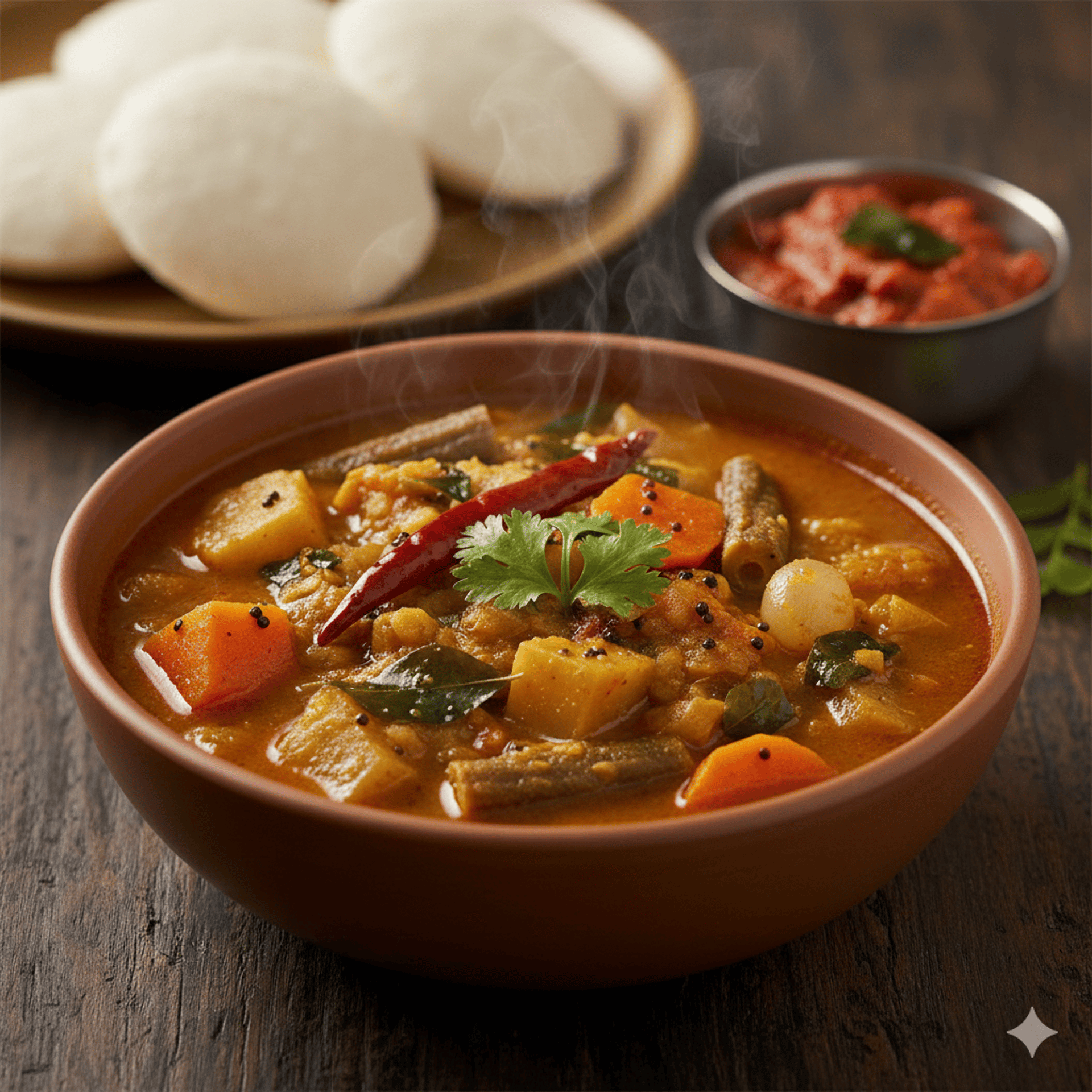
Story of Sambar: A Royal Mistake Turned Culinary Legend
The royal chef had meticulously planned to prepare Amti, a traditional Maratha lentil stew flavored with kokum, a prized souring agent. But disaster struck when he discovered the pantry completely bare of this essential ingredient, just as the distinguished prince was arriving at the palace gates.
1/19/20263 min read
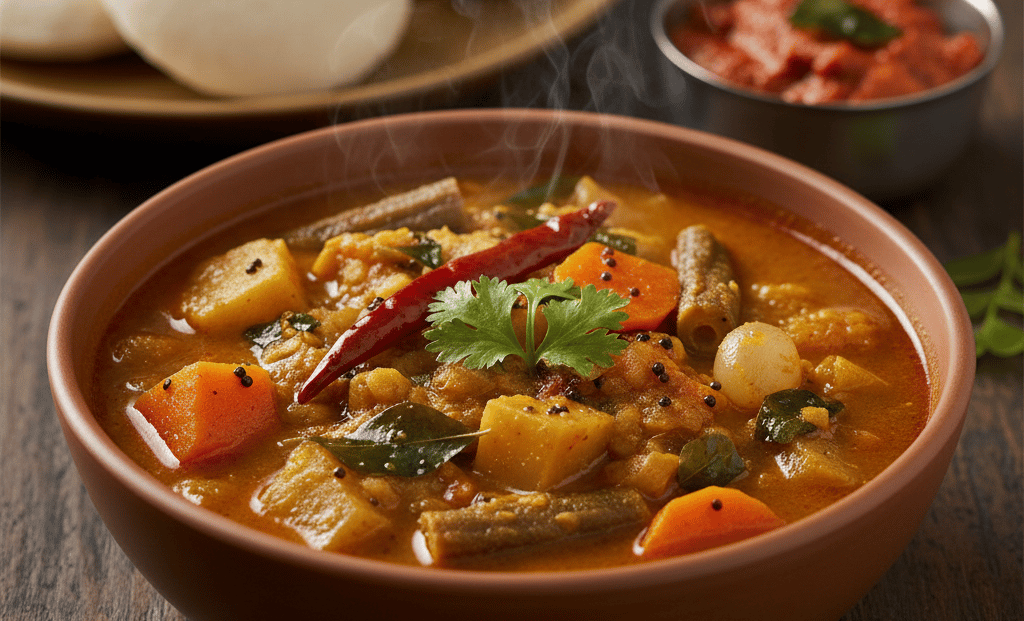
Sambar: A Royal Mistake Turned Culinary Legend
In the grand palaces of 17th-century Thanjavur, where Maratha kings ruled with elegance and a devotion to the arts, a culinary accident was about to change South Indian cuisine forever. What began as a chef's desperate improvisation would become one of the subcontinent's most beloved dishes—a story of serendipity, royal taste, and the beautiful accidents that shape culinary history.
The Palace, The Prince, and The Missing Ingredient
A Royal Dilemma
Young ruler Shahuji Bhonsle was preparing a feast for a distinguished guest—his cousin Sambhaji, son of the legendary Chatrapati Shivaji Maharaj. The prince was famed not only for battlefield bravery but also for his discerning palate, making the upcoming meal a matter of both honor and anxiety.
The royal chef had meticulously planned to prepare Amti, a traditional Maratha lentil stew flavored with kokum, a prized souring agent. But disaster struck when he discovered the pantry completely bare of this essential ingredient, just as the distinguished prince was arriving at the palace gates.
The Setting
17th-century Thanjavur—a center of art, culture, and culinary excellence under Maratha rule
The Guest
Prince Sambhaji, warrior and connoisseur, whose refined taste was legendary throughout the kingdom
The Crisis
No kokum in the royal pantry, with the honored guest moments away from arrival
The Improvisation That Changed Everything
In a moment of inspired desperation, the chef's eyes fell upon tamarind—a souring agent more commonly used in Tamil cuisine than in Maratha kitchens. It was a bold substitution, a culinary risk that could either save the feast or ruin his reputation entirely.
The Substitution
Tamarind replaced kokum, bringing a distinctly southern tang to the traditional Maratha preparation
The Enhancement
Aromatic spices, lentils, and fresh vegetables simmered together, creating unprecedented complexity
The Revelation
As the aroma filled the palace halls, tension transformed into anticipation
A Perfect Balance
The tang of tamarind, the earthiness of lentils, and the warmth of aromatic spices created a harmony that was both novel and deeply comforting. When presented to King Shahuji and Prince Sambhaji, the improvised dish was met with genuine delight—the kind of joy that comes from discovering something unexpectedly wonderful.
From Royal Court to Regional Icon
Impressed by both the chef's quick thinking and the dish's exceptional flavor, King Shahuji decided to honor his cousin by naming the creation after him. Thus, "Sambhar"—later simplified to "Sambar"—was born. What began as a frantic improvisation under pressure became a symbol of culinary creativity and cultural fusion.
1600s
Born in Thanjavur's royal palace as an accidental innovation
1700s
Spreads to temples and homes across Tamil Nadu
1800s
Adopted by Karnataka, Kerala, and Andhra Pradesh, each adding regional touches
Today
A beloved staple across South India and beyond, with countless variations
Tamil Nadu
Features drumsticks, brinjal, and a complex spice blend with fenugreek
Karnataka
Includes pumpkin, coconut, and a touch of jaggery for subtle sweetness
Kerala
Incorporates shallots, coconut oil tempering, and local vegetables
A Legacy Simmering Through Centuries
More Than Just a Dish
Today, every steaming bowl of Sambar tells a story that spans more than three centuries. It's a testament to the power of improvisation, the beauty of cultural fusion, and the way necessity can birth brilliance. From the marble halls of Thanjavur's palace to the humblest kitchens across South India, Sambar has become a culinary bridge linking diverse traditions and generations.
Each region has made the dish its own, adding local vegetables, adjusting spice levels, and creating variations as diverse as Southern India herself. Yet the essence remains—that perfect balance of tangy, savory, and aromatic that a panicked royal chef discovered on a pressure-filled afternoon centuries ago.
Serendipity
Born from a missing ingredient and quick thinking in a moment of crisis
Cultural Fusion
A beautiful marriage of Maratha and Tamil culinary traditions
Endless Adaptation
Evolving through centuries while maintaining its essential character
A dish born from a mistake, yet destined to become legendary—proof that sometimes the best creations emerge not from careful planning, but from the courage to improvise when all seems lost.
ZAPPAK CULINARY EXPEDITIONS PVT LTD
Cooking Made Fun for Everyone
Contact
Newsletter
email : customercare@zappak.in
+ 91 9667814039
© 2026 All rights reserved.
UDYAM -DL-03-0030513
CIN - U47219DL2023PTC410225
FSSAI CENTRAL LICENSE - 13326999000102
PAN - AAFCF3653A
TRADE LICENSE - MGT L08251791276996
IMPORTER - EXPORTER CODE - (IEC) AAFCF3653A
GST REGSITRATION - 07AAFCF3653A1Z1
D1/1232 Top Floor, Vasant Kunj, New Delhi 110070